|
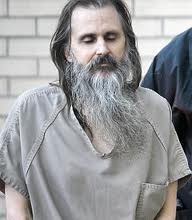 Salt Lake City –Capping an often inscrutable seven-year legal odyssey in and out of the mental health system, Brian David Mitchell was convicted in Utah Federal Court of the 2002 kidnapping and rape of Elizabeth Smart. Jurors deliberated only approximately five hours before rejecting the defendant’s legal insanity claims, notwithstanding the unusual crime story, Mitchell’s courtroom antics, and Mitchell’s history of being hospitalized at the Utah State psychiatric facility. Compounding the above evidence was testimony from three expert witnesses on the defendant’s behalf, including psychiatrist Paul Whitehead, M.D. (who had been responsible for monitoring and recommending treatment for Mitchell between 2005 and 2008), and Richart DeMier, Ph.D., a forensic psychologist who evaluated and monitored Mitchell in 2009. Dr. Whitehead testified that Mitchell had Delusional Disorder, Dr. DeMier that he suffered from Schizophrenia. Salt Lake City –Capping an often inscrutable seven-year legal odyssey in and out of the mental health system, Brian David Mitchell was convicted in Utah Federal Court of the 2002 kidnapping and rape of Elizabeth Smart. Jurors deliberated only approximately five hours before rejecting the defendant’s legal insanity claims, notwithstanding the unusual crime story, Mitchell’s courtroom antics, and Mitchell’s history of being hospitalized at the Utah State psychiatric facility. Compounding the above evidence was testimony from three expert witnesses on the defendant’s behalf, including psychiatrist Paul Whitehead, M.D. (who had been responsible for monitoring and recommending treatment for Mitchell between 2005 and 2008), and Richart DeMier, Ph.D., a forensic psychologist who evaluated and monitored Mitchell in 2009. Dr. Whitehead testified that Mitchell had Delusional Disorder, Dr. DeMier that he suffered from Schizophrenia.
That the trial ever took place was a miracle. Mitchell had been found to be incompetent to stand trial in 2005, repeatedly found incompetent in subsequent court rulings, and then deemed untreatable, in a matter that went all the way to the Utah Supreme Court. The public came to know Mitchell as a grey-haired, bearded and drawn defendant who would sing in court to the point of required removal. State Prosecutors were forced to concede the possibility in 2008 that Mitchell would never be brought to trial. The case was essentially dead.
In 2008, the United States Attorney’s Office revisited the idea of federal charges against Mitchell, and sought out Michael Welner, M.D., Chairman of The Forensic Panel and Associate Professor of Psychiatry at NYU School of Medicine, to provide a definitive last word on Mitchell’s mental state. The mandate brought to Dr. Welner, as in a number of other previous cases, was to identify any and all evidence that would reflect certainty to the benefit of prosecution or defense.
Was Mitchell a religious zealot or a psychotic? The competency case had been framed this way by the state court, relying upon the testimony of Jennifer Skeem, Ph.D. and Stephen Golding, Ph.D, two nationally recognized forensic psychologists. Dr. Skeem was the only doctor with whom Mitchell had interviewed; Dr. Golding admitted to deferring to her for this reason. The doctors had written lengthy reports and their 2005 testimony in the Mitchell competency hearing was trumpeted by colleagues for its importance and example.
Dr. Welner made it clear to AUSA Richard Lambert in an initial September 2008 meeting that despite the need to probe some uncertainties in the case, he might ultimately agree with the defense team. But AUSA Lambert, a veteran of numerous sensitive cases, appealed to Dr. Welner to probe the questions anyway, and to keep an open mind. The results led to a historic reversal of fate for Brian David Mitchell.
On initial scrutiny of the record, Dr. Welner determined that the case could not apply a psychiatric diagnostic assessment until accounting for beliefs native to Fundamentalist LDS teachings. This had not yet been done by any of the examiners. Dr. Welner subsequently embarked on careful study of the Mormon faith and then, its fundamentalist offshoots, including scriptures written by leaders of various schismatic sects. The research yielded important data on the origin of Mitchell’s beliefs and the scripture he and his wife had fashioned. Furthermore, according to Dr. Welner, the findings heralded the need to redirect the Mitchell focus to consideration of three borders rather than two: that of zealotry, psychosis, and now social deviance.
With rigor that distinguishes The Forensic Panel, Dr. Welner reviewed hundreds of sources of information, and interviewed 58 sources. These included a five hour interview with Elizabeth Smart and a six hour interview with Mitchell’s co-conspirator, Wanda Barzee. Uncovering a sense of hidden impressions in the medical chart, Dr. Welner also worked with the facilitation of then-US Attorney Brett Tolman and federal investigators to arrange for thirty additional systematic and symptom-oriented interviews of Utah State Hospital staff. These interviews unearthed a great degree of hidden skepticism among those paraprofessionals interacting with Mitchell every day, and introduced the experiences they witnessed.
Dr. Welner’s 205-page June 2009 report has since been considered the most complete written work on Mitchell’s history and diagnosis and reframed the historical reference point for the case from previous reports whose errors and presumptions had impacted other examiners. Prior to its release to the court, the heavily footnoted report was peer-reviewed by forensic psychologist Eric Drogin, Ph.D. of Harvard Medical School and forensic psychiatrist David Walker, M.D. of The Forensic Panel. The work revealed a plethora of explosive and previously unknown data and informed conclusions that heavily supported Mitchell’s competency.
Mitchell proved to have a prolific and longstanding recidivistic history of pedophilia, hypersexuality, and a legacy of psychopathic behavior. His disruptive singing proved to be limited to court settings and to have been useful to him at previous workplaces and later, in jail and around doctors whose interviews he wished to thwart. Informants repeatedly came to portray Mitchell as a man of disposable personnas from early in life, uniquely sadistic to his family and parasitic to those who would extend a helping hand. Moreover, evidence of Mitchell promoting his ascent as a polygamous sect leader long predated the claims of his scripture, the Book of Immanuel David Isaiah.
When the defense subsequently challenged Dr. Welner’s methodology and The Forensic Panel’s peer review in a November 2009 Daubert hearing, Judge Dale Kimball ultimately ruled that Dr. Welner’s efforts represented “best practices in forensic psychiatry and psychology.”
In the weeks preceding the 2009 competency hearing, Dr. Welner’s scrutiny then yielded another devastating discovery: that the defense lead witness, psychologist Dr. Skeem, had concealed probative data from her last interview with Brian Mitchell. This data specifically demonstrated that reflected Brian Mitchell was quite rationally calculating decisions he was making during plea negotiations in 2004. Dr. Skeem, testifying under oath in the competency hearing of 2005, told the court she was ignorant of the plea negotiations. Her notes, unearthed only in 2009 with Dr. Welner’s insistence, revealed that contrary to her professed ignorance, over a third of her documented meeting with the defendant specifically addressed plea negotiations and reflected upon Mitchell’s rational attempts to navigate his way out of the notoriety of his charges. Mitchell had, as it turned out, aimed in 2004 to plead guilty to kidnapping and not to rape so as to destigmatize his actions in the eyes of the general public and to prompt others’ reconsideration of him. The 2005 state court judging competency and subsequent examiners were never aware of Mitchell’s engagement in these and other fine points.
The competency hearing in December 2009 featured testimony from all of the aforementioned witnesses and Noel Gardner, M.D., who had testified for prosecutors in the 2005 state competency proceeding. Prosecutors had studied the mental health and forensic issues with the guidance of Dr. Welner’s report, and each then crafted their approach to witnesses with enhanced sophistication for the science. Highlighting the results of their trial prep was the devastating cross examination of Dr. Skeem and her earlier work by then-U.S. Attorney Tolman and a stifling cross-examination of Dr. DeMier by AUSA Diana Hagen.
The court issued a 149-page opinion in March 2010 supporting Judge Kimball’s finding of competence. The opinion (see below) heavily cited Dr. Welner’s June 2009 report (Exhibit 20) as well as his later testimony, crediting Dr. Welner and Dr. Gardner for the credibility of their in-court presentations. Mitchell proceeded as fit for trial.
The month-long trial began in November 2010. New lead counsel AUSA Felice Viti supplemented the now-substantial body of evidence of Mitchell’s criminal responsibility with data gathered from an even more extensive debriefing of Elizabeth Smart. Ms. Smart introduced compelling testimony that began the trial. Viti and colleagues, working in concert with Dr. Welner on identifying yet-silent witnesses to the events of 2002 and 2003, presented the court with numerous witnesses who added to the historical reference point of Brian Mitchell and his diagnosis.
Included among these were Officer Jon Richey, a homicide detective who answered an August 2002 call to the Salt Lake City Library to investigate the possibility that a veiled woman there was the missing Elizabeth Smart. Brian Mitchell intercepted Officer Richey and, invoking civil rights of religious observance and suggesting the Muslim faith, redirected the officer from lifting the mysterious woman’s veil. An opportunity missed, but for the skills of the defendant Mitchell. This and other escapes from questioning onlookers highlighted Brian Mitchell’s presence of mind and capacity to think in the moment, and how he could use his verbal gifts to disarm.
Wanda Barzee appeared as well, a compelling testament to Mitchell’s manipulation of her devout faith. Mitchell’s co-defendant gave presence to Mitchell’s approach of using blessings to bend Ms. Barzee to accept his indiscretions and do his will. The inconsistencies of Barzee’s testimony and her continuing difficulty explaining her reactions to Mitchell reinforced Dr. Welner’s later testimony discrediting the historical value of the scripture she wrote in their many travels. Journey Through the Land and Birth of Zion had been vital reference points for the insanity defense; testimony from witnesses demonstrated these works to be self-serving distortions.
The defense presented numerous witnesses supporting their contention of legal insanity, including Dr. Whitehead, Dr. DeMier, and Dr. Golding. The witnesses emphasized Mitchell’s grandiose claims of being the Davidic King, the One Mighty and Strong, and the fate he had predicted for himself while traveling with Elizabeth Smart.
Among the witnesses also appearing at trial were many who were unknown to the case before Dr. Welner’s effort, including Utah State Hospital witnesses. On rebuttal to the defense case, AUSA David Backman set the table for mental health testimony of Dr. Gardner and Dr. Welner with his direct examination of Professor Daniel Peterson and the stipulation of Sterling Allan. Their expertise in theology engaged the belief system of fundamentalist LDS and the writings of Mitchell’s personal scripture. Presentation of the theology evidence was further informed by findings from Dr. Welner’s research on fundamentalist polygamy sect leaders and their psychology.
Prosecutors called Dr. Welner as their last witness, aiming to tie together the voluminous fact evidence presented to the court over the previous month. Over two days of court testimony, Dr. Welner explained why Mitchell did not suffer a severe mental illness, that pedophilia was a driving factor, how his narcissistic personality intersected with his pedophilia as he aimed to build a fringe sect, and how psychopathy manifested in Mitchell’s sadism, parasitism and unusual manipulativeness. Dr. Welner applied a cultural context from the theology expert testimony and gained through the extensive research he had done on fundamentalist polygamy sect leaders and their psychopathology to demonstrate how familiar Mitchell’s expressed ideas were to his peers.
Key to Dr. Welner’s conclusions was his analysis that beyond the question of whether Mitchell’s beliefs were fixed and false, there was ample evidence that Mitchell did not even believe his own ideas in the first place, and lacked the depth of conviction to allow consideration of the meaning of intense beliefs. Mitchell’s deference to satisfying his sexual gratification was one example of how fluid the defendant’s ideas were. “Lust trumped religion,” opined Dr. Welner, speaking to Mitchell’s opportunism and how closely it related to Mitchell’s expressions of faith.
Illustrating the defendant’s insincerity, Dr. Welner pointed out, “He did not feed the hungry, he ate at shelters. He did not visit the infirm, he lived at his mother’s home while she tended to his sister dying of cancer, and never helped his elderly mother beyond squatting in her home. He did not clothe the poor, he looted clothes from the Wests when he lived with them. He did not help children, he raped Elizabeth Smart,” and referenced the hypocrisy of Mitchell’s “grooming his a child daughter in law with pornography while he prayed, adherence to lymphology with his indulgence of drugs and alcohol, his efforts at healing a cow with cooking his stepdaughter’s pet rabbit and feeding it to her.”
The Mitchell insanity rebuttal culminated in Dr. Welner’s detailing evidence for pedophilia across the life cycle and not merely during periods of Mitchell’s religious zealotry. The jury learned of cognitive distortions and how sex offenders – especially clergy sex offenders – manipulate their relationship with God through cognitive distortions to manage the impressions of others and to wear away the defenses of those they prey upon. Dr. Welner drew parallels between Mitchell’s statements to Elizabeth and police and those explanations offered in studies of offending clergy who have no psychotic illness.
Confronting defense efforts to suggest that Mitchell’s repeated rape of Elizabeth Smart was an extension of religious aspirations, Dr. Welner used an evidence-based approach to challenge the listener that to overlook pedophilia was to ignore “the hippopotamus in the room.” The jury, later interviewed, noted Dr. Welner’s testimony and commented that his ability to make complex ideas understandable proved influential to them as they reached a guilty verdict in a surprisingly short period.
The case, the verdict, and its visibility have significant repercussions for justice, according to Dr. Welner. The case revealed the lack of attention to the psychopathology of some polygamous fundamentalist sects – precisely because they cleverly keep themselves from view. Reflecting upon the shadowy elusiveness of schismatic fundamentalist LDS sects, he observed, “Elizabeth Smart had family waiting for her when she was gone. But certain fundamentalist LDS sects sexually exploit tens of thousands of children and materially exploit the US government by perverting religious precepts and manipulating rejectionist ideals. These children have no voice, know no freedom, and remain more anonymous than even illegal aliens – because the sociopathic and often pedophilic sect leaders who enslave and even brainwash them make the rules of the sect and enforce silence and separation. The Mitchell verdict should redirect attention to those living in our land who do not enjoy the protections of justice nor the liberty that justice should protect.”
Dr. Welner added, “The bravery of Elizabeth Smart’s insistence that her testimony be heard is a watershed event for victims everywhere. The voiceless, the powerless, will not always feel redemption from justice. But if the victimized do not speak up, they will never know justice.”
Dr. Welner also commended prosecutors Viti, Hagen, Backman, Alicia Cook and former prosecutors Tolman and Lambert for their openness to digesting new technical material and to the ethical manner in which they applied it. “The smartest, the best attorneys are those who are most open-minded. Their newfound understanding becomes the education of the jury. Clearly, they did an excellent job of organizing a science that had befuddled justice for seven years and helped the jury find its clarity. In the end, it looked easy. But then, so does the symphony.”
For additional information on the Brian David Mitchell trial click here and here.
|


